The quantitative polymerase chain reaction (qPCR)A laboratory analytical technique for quantification of a target gene based on DNA., also called quantitative real-time polymerase chain reactionMakes copies of a specific DNA sequence within a target gene of microorganisms that can be further analyzed., and reverse transcriptase-qPCR (RT-qPCR) methods are typically used to quantify the abundance and activityRefers to when a microorganism performs a specific function (e.g., sulfate reduction, metabolism of benzene) of target microorganisms capable of contaminant biodegradationA process by which microorganisms transform or alter (through metabolic or enzymatic action) the structure of chemicals introduced into the environment (USEPA 2011). or of genes (DNA by PCR and qPCR) or transcripts (RNA by RT-qPCR) in biodegradation pathways. These methods can provide a direct line of evidence for evaluating the feasibility and performance of the biodegradation processes underlying monitored natural attenuation (MNA) and bioremediationThe treatment of environmental contamination through the use of techniques that rely on biodegradation. Bioremediation has two essential components: biostimulation and bioaugmentation. strategies. Traditionally, cultivation-based methods that rely on growth of the target microorganisms in the laboratory (such as microcosms, plate counts, or most probable number (MPN) analyses) have been used to estimate contaminant-degrading microbial populations. However, cultivation dependent techniques are laborious, time-consuming, and most importantly biased, because over 99% of microorganisms present in the environment cannot be grown under standard laboratory conditions (Amann et al. 1995).
Additional introductory information regarding PCR, qPCR, and RT-qPCR methods is available in the PCR Fact Sheet and the qPCR Fact Sheet. In addition, the qPCR Fact Sheet includes a list of current qPCR targets.
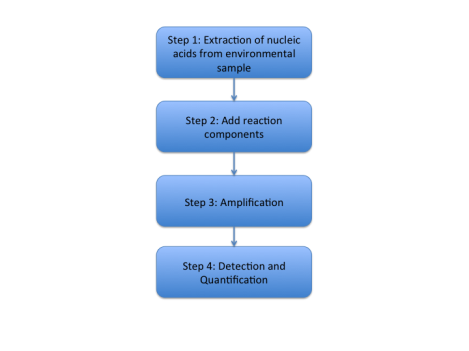
Conversely, qPCR and RT-qPCR can be applied to environmental samples independent of cultivation in the laboratory. Nucleic acids (DNA and RNA) are extracted directly from the microorganisms associated with a soil, sediment, or water sample. Thus, qPCR avoids the complications associated with cultivation and provides a direct, sensitive, and accurate method to quantify specific target genes indicative of specific microorganisms or biological processes. In remediation, qPCR has been used to quantify microorganisms capable of a variety of environmental processes including biodegradation of chlorinated solvents, petroleum hydrocarbons, and fuel oxygenates. Within the environmental industry, qPCR analysis has been offered on a commercial basis since 2002. qPCR is a reliable and frequently used method for rapid and accurate enumeration of geneA segment of DNA containing the code for a protein, transfer RNA, or ribosomal RNA molecule (based on Madigan et al. 2010). targets in clinical, pharmaceutical, agricultural, and environmental applications and in academic research. Figure 4-1 includes the steps involved in qPCR.
Site characterization, remediation, monitoring, and site closure require thorough examination of available chemical, geochemical, and microbiological data. In addition to identifying contaminants and delineating the spatial extent of contamination, site characterization includes defining baseline conditions for a preliminary evaluation of potential remedies (including MNA). The purpose of performing qPCR and RT-qPCR analyses is to provide the microbiological lines of evidence: quantification of the abundance and activity of microorganisms capable of biodegradation of the relevant contaminants at a site. Examples of sites where qPCR and RT-qPCR have been successfully used are presented in Table 4-1.
The historical groundwater monitoring data for this TCE-impacted site revealed predominantly anoxic conditions and formation of vinyl chloride and ethene—but at low concentrations. During site characterization, qPCR was performed to quantify DehalococcoidesDehalococcoides is a genus of organohalide-respiring bacteria (for example, bacteria that use chlorinated solvents as metabolic electron acceptors) within the phylum Chloroflexi, in the domain Bacteria, and currently represented by a single species, Dehalococcoides mccartyi (Dhc). This species is the only one known with strains that dechlorinate dichloroethenes (DCEs) and vinyl chloride (VC) to ethene and inorganic chloride. mccartyi (Dhc). Dhc and vinyl chloride reductase genes were detected, but at low abundances. This result indicated that bioaugmentationThe introduction of cultured microorganisms into the subsurface environment for the purpose of enhancing bioremediation of organic contaminants (USEPA 2011) would not be necessary but also suggested that MNA would not be an appropriate site management strategy. Site managers elected to pursue enhanced bioremediation and biostimulationA remedial technique which provides the electron donor, electron acceptor, and/or nutrients to an existing subsurface microbial community to promote degradation. was implemented. For a more complete example detailing how qPCR can aid in site characterization, remedy selection, and performance monitoring, see Case Study A.4.
At a petroleum-impacted site in New York, the corrective action plan employed in situ chemical oxidation (ISCO) with a calcium peroxide activated sodium persulfate product to destroy contaminant mass, followed by bioremediation as a polishing step. Since reaching the performance objectives often relies upon biodegradation of residual contaminants following the direct ISCO phase, RT-qPCR quantification of naphthalene dioxygenase (NAH) and toluene monooxygenase (TMO) gene expression was performed to monitor the activity of aerobic BTEX and PAH degrading bacteria throughout the project. Dissolved benzene concentrations decreased rapidly during the active ISCO phase. Even after depletion of the chemical oxidizing agent, concentrations of petroleum hydrocarbons including benzene continued to decrease albeit at a slower rate. While dissolved oxygen was produced by decay of the calcium peroxide, the observed increase in groundwater pH accompanying ISCO led stakeholders to doubt that the continued decrease in contaminant concentrations was due to biodegradation. However, RT-qPCR results revealed expression of NAH and TMO genes during these sampling events, demonstrated the activity of aerobic BTEX and PAH utilizing bacteria, and indicated that biodegradation was indeed the treatment mechanism despite elevated groundwater pH.
At this site injection of a pH-buffered emulsified vegetable oil was conducted (Vroblesky et al. 2010). qPCR demonstrated that electron donor addition and pH modification resulted in substantial increases in the abundance of Dhc and TCE reductive dehalogenaseAn enzyme that catalyzes the removal of a halogen atom from an organic compound. genes, which corresponded to dechlorination of TCE and cis-DCE.
When site characterization results and closure objectives dictate that MNA is not an appropriate site management strategy, engineered remediation options must be considered. Often, qPCR results obtained during the site characterization stage demonstrate that the contaminant degrading microorganisms are present at low abundances under the existing site conditions. In such cases, enhanced bioremediation through biostimulation (such as the addition of an electron donor, electron acceptorA chemical compound that accepts electrons transferred to it from another compound (based on USEPA 2011)., or nutrient) is commonly performed to promote growth and activity of contaminant degrading microorganisms. One of the most common applications of qPCR and RT-qPCR is to document that biostimulation did indeed result in the desired increase in the abundance and activity of specific contaminant degrading microorganisms. Case Study A.4 and Case Study A.5 provide detailed examples of how qPCR is used to determine the effectiveness of biostimulation by electron donor addition at sites impacted by chlorinated ethenes. Likewise, Case Study A.6 shows how RT-qPCR quantification of toluene dioxygenase (TOD), phenol hydroxylase (PHE), as well as the measurement of Methylibium petroleiphilum PM1 16S rRNAA subunit of the ribosome composed of ribonucleic acid (RNA). The RNA sequence is used to classify and identify microorganisms (e.g. genus and species)., were used to demonstrate that oxygen addition promoted the activity of aerobic BTEX- and MTBE-degrading microorganisms at a gasoline impacted site.
While perhaps not as common, qPCR and RT-qPCR analyses are also used to assess the impact of physical and chemical treatment approaches on contaminant-degrading microorganisms to evaluate the potential for subsequent biodegradation to achieve site closure.
The application, analysis, and interpretation of microbiology-based EMD methods differ from typical soil and groundwater geochemical measurement in a number of ways. For example, microbial biomarkers cannot easily be preserved, and sample handling and processing requires special care. The analysis of microbial parameters requires specific data quality considerations for sampling plans, sample collection and handling, quality control and laboratory procedures, and these are discussed in Section 10. Included below is a brief introduction to how qPCR data are typically reported and some specific examples of how the data would be interpreted in answering the questions presented in Table 2-3.
qPCR results are generally presented as gene copies per milliliter (mL) or per liter (L) of water or per gram (g) of solids. If a cell contains only one copy of the target gene, the number of gene copies equals the number of cells. When a cell contains multiple copies of the target gene, the reported number can be converted based on knowledge of the number of target gene copies per genome. RT-qPCR results are reported as transcript copies per mL of water or per g solids. In many cases, genes of active degradation pathways are transcribed (messenger RNA [mRNA] is produced) and transcripts can be quantified by RT-qPCR. Since a microbial cell can contain a few to many transcript of a target gene, meaningful comparisons between samples can be obtained by normalizing the numbers of transcript abundance per cell (determined by qPCR).
Table 4-2 describes information that should be provided in laboratory reports of qPCR EMD data, including common laboratory report information, recommended information about the qPCR method, and desirable information about the qPCR method and results. The analytical laboratory itself should follow the Minimum Information for Publication of Quantitative Real-Time PCR Experiments (MIQE) guidelines for qPCR (Bustin et al. 2009).
Interpretation of qPCR and RT-qPCR results depends on the contaminant, the biodegradation pathway, and site-specific factors including geochemical conditions and stage in the overall project life cycle. To illustrate interpretation of qPCR and RT-qPCR results, each of the questions relevant to qPCR and RT-qPCR in Table 2-3 is discussed below.
A) Are contaminant-degrading microorganisms present?
As a part of site characterization and to aid in remedy selection, qPCR and RT-qPCR can be used to detect and quantify biomarkers of contaminant-degrading microorganisms. The presence/absence of keystone bacteria responsible for the degradation of specific contaminants (i.e., Dhc for chlorinated ethene detoxification) provides relevant information about the potential success of MNA as a viable site management approach. On the other hand, qPCR results revealing low abundances or non-uniform distribution of contaminant-degrading microorganisms indicate that bioremediation options (that is, bioaugmentation and/or biostimulation) may be needed. As discussed in the qPCR Fact Sheet, qPCR analyses have been developed for a broad spectrum of genes implicated in biodegradation pathways. Thus, selection of an appropriate qPCR analysis depends upon the contaminants and geochemical conditions (for example, oxic or anoxic) as illustrated in the following example.
Consider a site that is impacted by the chlorinated solvents PCE and TCE. Under anoxic conditions, PCE and TCE can undergo sequential reductive dechlorination through the intermediate products cis-dichloroethene (DCE) and vinyl chloride (VC) to ethene (DiStefano et al. 1991; Freedman and Gossett, 1989). To date, Dhc is the only bacteria capable of complete reductive dechlorination of PCE to ethene (Maymó-Gatell et al. 1997). In addition, some of the VC reductase genes that encode the enzyme responsible for dechlorination of VC to produce ethene have been identified (Müller et al. 2004, Krajmalik-Brown et al. 2004). Performing qPCR quantification of Dhc 16S rRNA genes and VC reductase genes provides a direct line of evidence to evaluate the feasibility and the long-term performance of MNA at PCE and TCE impacted sites. If Dhc biomarkerA distinctive (unique) characteristic of a biomolecule that can be measured and used as an indicator of a target microorganism or biological process. For example, a specific DNA sequence (used as a probe on a microarray) could be a biomarker for a particular microorganism (e.g., Desulfotomaculum). genes are not detected in samples obtained from the impacted zone, complete reductive dechlorination to ethene is unlikely and other site management strategies should be considered. Conversely, the detection of Dhc biomarkers indicate at least the potential for complete reductive dechlorination.
To evaluate the biodegradation component of MNA feasibility and performance, the abundance of these key dechlorinating bacteria must also be considered. Lu et al. (2006) proposed a screening criterion of 107Dhc cells per L to identify sites where MNA may be effective. Further research has indicated that ethene formation coincides with Dhc cell titers of >2 x 10⁶ per L. High numbers ( > 105) of the VC reductive dehalogenase genes vcrA and/or bvcA are strong indicators for complete dechlorination to ethene, however, VC reductase genes that are not yet identified may exist and may contribute to ethene formation (see P.K. Lee et al. 2008).
B) Are contaminant-degrading microorganisms active?
The presence of biodegrading bacteria may not ensure efficient contaminant removal, so activity must sometimes be measured as well. RNA is generally a short-lived molecule that is central to the production of proteins, including the enzymesAny of numerous proteins or conjugated proteins produced by living organisms and facilitating biochemical reactions (based on USEPA 2004a). responsible for contaminant biodegradation (see Appendix D, Microbiology FAQ). RT-qPCR measures RNA rather than DNA, and thus quantifies target gene activity (i.e., transcriptionThe first step in activation of a biochemical pathway where a complementary RNA copy is synthesized from a DNA sequence.) as a measure of contaminant degradation, further information about RT-qPCR can be found in Section 4.3.3. Logically, contaminant-degrading microorganisms must not only be present in sufficient abundance but also active under existing site conditions for a successful remedy. Conversely, qPCR results may show that contaminant-degrading microorganisms are present but RT-qPCR could reveal that these microorganisms or biodegradation pathways are not active. In such a case, bioremediation options such as biostimulation (the addition of an electron acceptor such as oxygen for the remediation of petroleum compounds) should be considered.
As an example, consider a site that is impacted by petroleum hydrocarbons, where benzene, toluene, ethylbenzene, and xylenes (BTEX) are the primary contaminants. BTEX compounds are susceptible to biodegradation by different pathways under oxic and anoxic conditions. RT-qPCR analyses are performed to quantify activity of specific genes to determine whether or not BTEX biodegradation pathways are active under existing site conditions. More specifically, RT-qPCR quantification of benzylsuccinate synthase (bssA) genes is employed to determine whether anaerobic pathways for the biodegradation of toluene, ethylbenzene, and xylenes are active. To evaluate aerobic BTEX biodegradation activity, a site manager would submit samples for RT-qPCR analyses targeting aromatic oxygenaseAn enzyme that catalyzes the incorporation of molecular oxygen into a compound (based on Madigan et al. 2010). genes encoding toluene/benzene dioxygenases. There may be other pathways and enzymes that contribute that would not be captured in the specified analyses.
C) Are the microorganisms capable of complete degradation?
Partial biodegradation of some contaminants will result in the accumulation of intermedate products, which can pose a greater threat to human health and the environment. For example, partial reductive dechlorination of PCE and TCE yields cis-DCE and VC, both of which are more mobile and toxic than the parent compounds. While a number of bacteria have been identified that are capable of reductive dechlorination of TCE to cis-DCE (members of the genera Dehalobacter, Desulfuromonas ) to date, Dhc is the only bacteria known to be capable of complete reductive dechlorination of chlorinated ethenes such as TCE to ethene. qPCR analyses are available to quantify the genes encoding the enzymes responsible for the dechlorination of chlorinated ethenes. A transient increase in intermediate product concentrations during anaerobic treatment of PCE/TCE would be expected, DCEs and VC can persist if Dhc strains capable of efficiently degrading the lower chlorinated ethenes are present in low abundance or absent. In this case, a site manager should consider qPCR quantification of Dhc 16S rRNA gene and VC reductase gene copies to determine whether Dhc strains capable of complete reductive dechlorination to ethene are present and abundant.
The following questions address typical issues that may arise at many sites and focus on different areas where qPCR may be useful.
H) Are numbers of contaminant-degrading microorganisms and/or genes changing?
Ultimately, MNA can be an effective site management strategy when target microorganisms capable of biodegrading the contaminants are present and active under existing environmental conditions. On the other hand, qPCR results revealing a low abundance of target microorganisms with non-uniform distribution within the aquifer would indicate that biostimulation or bioaugmentation options may be needed.
For example, consider a site impacted by PCE and TCE. In addition to the qPCR detection of VC reductase genes, Lu et al. (2006) proposed that a Dhc abundance of 107 cells/L be used as a screening criterion for sites at which MNA would provide a generally acceptable rate of reductive dechlorination. In other words, qPCR results can be a powerful supplemental line of evidence along with traditional chemical and geochemical analyses that could be used as a remedy screening and performance-monitoring tool.
For other common contaminants, most notably petroleum hydrocarbons, RT-qPCR analyses may be more appropriate. For a site where MNA is being considered for a dissolved BTEX plume, BTEX concentrations may appear to be decreasing but could be the result of physical processes rather than biodegradation. RT-qPCR quantification can determine whether known pathways for aerobic and anaerobic BTEX biodegradation are active under existing site conditions. When viewed along with the trends in contaminant concentrations and geochemical parameters, the lack of or decrease in the activity of these degradation pathways as determined by RT-qPCR would indicate that MNA may not be appropriate and that bioremediation (for example electron acceptor addition) should be considered.
I) Is the remediation strategy affecting the numbers or types of contaminant-degrading microorganisms?
The purpose of any biostimulation strategy is to add an amendment such as an electron donor (e.g., lactate, emulsified vegetable oil) or acceptor (e.g., oxygen) that will stimulate growth and activity of contaminant-degrading microorganisms. Thus, qPCR is a direct route to assess the feasibility, evaluate the effectiveness, and monitor the progress of biostimulation as a treatment strategy. Whether during feasibility studies or in full-scale implementation, qPCR or RT-qPCR results should reveal an increase in the abundance and activity of contaminant degrading microorganisms in response to the amendment. When such increases are not initially evident, qPCR should be considered to evaluate the possibility that othermicrobial groups (for example methanogens or sulfate reducers) are competing with the biodegrading microorganisms for the added electron donor.
As an example, consider a site in which qPCR revealed Dhc abundance on the order of 103 to 104 cells per liter (cells/L) and VC reductase genes also have been detected in pretreatment groundwater samples obtained along the dissolved plume. Based on the observed Dhc abundance and the screening criterion of 107 Dhc cells/L proposed by Lu et al. (2006), complete reductive dechlorination of TCE may be possible under existing site conditions but not necessarily at an acceptable rate. Sites impacted by chlorinated ethenes, where Dhc 16S rRNA genes and VC reductase genes are detected but in low abundance, may require the addition of an electron donor to stimulate the growth of these key dechlorinating bacteria and promote reductive dechlorination. In such cases, qPCR can be useful to measure the increases in the numbers of Dhc bacteria and VC reductase genes to ensure that biostimulation achieves detoxification.
In some cases, qPCR analysis may indicate that contaminant-degrading microorganisms are not present or are present in such low abundance that initiating degradation activity requires bioaugmentation. Similar to the discussion for biostimulation, qPCR analysis is used to document the in situ maintenance of key strains of the bioaugmentation culture. qPCR can also reveal decreases in target gene abundances, suggesting that the biodegrading bacteria experience a limitation, and another injection of electron donor should be considered to sustain biodegradation.
J) Is there a biological basis for intermediates accumulating?
Partial biodegradation of some contaminants like PCE and TCE can result in the accumulation of toxic intermediate products. To examine the potential for accumulation of intermediates, qPCR can be used to monitor specific microorganisms and functional genes involved in the degradation of the intermediate compounds. As an example, at a site impacted by TCE, groundwater monitoring results may indicate anoxic conditions but suggest that DCE is accumulating with little to no production of VC.
O) Does microbial community compositionDescription of the types or identities of microorganisms present in a sample. support the remediation strategy?
Monitoring a single group of contaminant-degrading microorganisms or one particular functional geneA segment of DNA that encodes an enzyme or other protein that performs a known biochemical reaction. For example, the functional gene tceA encodes the reductive dehalogenase enzyme that initiates reductive dechlorination of TCE. Other genes can code for RNA entities which can regulate the activity of other DNA target sequences. may not provide all data needed to assess and monitor a remediation strategy. At many sites, particularly those impacted by contaminant mixtures, site managers should consider qPCR quantification of multiple gene targets to obtain more comprehensive information. Since DNA is already extracted from the sample for the first target gene, with marginal additional effort qPCR analysis of additional target genes can provide more complete information.
For instance, a site is impacted not only by the chlorinated ethenes PCE and TCE but also chlorinated ethanes (such as 1,1,1-trichloroethane) and chlorinated methanes (chloroform). Electron donor addition has been performed to stimulate reductive dechlorination. With the mixture of contaminants present, a site manager may wish to perform qPCR quantification of other relevant dechlorinators that may contribute to PCE/TCE, 1,1,1-trichloroethane, and chloroform biodegradation (for example, Dehalobacter restrictus, Geobacter lovleyi, Desulfuromonas spp., and Desulfitobacterium spp.) in addition to Dhc. Furthermore, electron donor addition stimulates growth of microorganisms such as sulfate reducing bacteria (SRB) and methanogens, which are competing with Dhc for hydrogen. In fact, initial stimulation of SRBs and methanogens following electron donor addition is frequently observed.
P) Do contaminant-degrading microorganisms continue to be sufficiently abundant?
Ultimately, the success of any biodegradation remediation strategy depends upon maintaining conditions that sustain the activity of a sufficient population of contaminant-degrading microorganisms. qPCR results can help to ensure that target microbial populations are maintained and biodegradation activity is sustained. Substantial decreases in the abundance of key biomarker genes or transcripts provide direct evidence that the conditions are not favorable for sustained contaminant degradation, and that amendment addition may be required. This relevant information may not be readily available from contaminant and geochemical monitoring data and demonstrates the value of qPCR.
The most common use of qPCR as a performance-monitoring tool is tracking the abundance of Dhc and associated reductive dehalogenase genes to evaluate biostimulation as a remediation strategy for chlorinated ethenes. If qPCR results indicate a stable Dhc population size of 106-107 cells/L, complete reductive dechlorination to ethene is likely to continue. Conversely, consistent decreases in the Dhc abundance should trigger re-evaluation and potentially additional corrective actions to stimulate and maintain these contaminant-degrading bacteria.
While Dhc is the most common example, with a broad spectrum of analyses available, qPCR can be used to monitor populations of a variety of contaminant-degrading bacteria (such as for a site impacted by perchlorate and ammonium perchlorate). Biostimulation through the addition of an electron donor is also a common remediation approach at sites impacted by perchlorate. qPCR detection and quantification of
Q) Are contaminant-degrading microorganisms remaining active?
As discussed in Section 4.3.3.2, for some classes of contaminants like petroleum hydrocarbons, contaminant-degrading microorganism may be abundant but not active under the existing site conditions. For example, consider a gasoline-impacted site where geochemical parameters indicate oxic conditions but the trends in contaminant concentrations suggest that MNA will not meet site remediation goals in a reasonable timeframe. To assess whether oxygen addition can enhance BTEX biodegradation, RT-qPCR could be used to determine whether the transcription of aromatic oxygenase genes increases following oxygen biostimulation, which is generally followed by decreases in parent compound concentrations. RT-qPCR quantification of aromatic oxygenase gene transcription could then be used as a performance monitoring tool.
R) Is there a biological basis for intermediates accumulating?
Partial biodegradation of some contaminants like PCE and TCE can result in the accumulation of intermediates (such as cis-DCE and VC). To examine the potential for accumulation of intermediates, qPCR can be used to monitor specific microorganisms and functional genes involved in the degradation of the intermediate compounds. As an example, consider a site impacted by TCE where groundwater monitoring results indicate anoxic conditions but also suggest that cis-DCE is accumulating with little to no production of VC. While a number of bacteria have been identified that are capable reductive dechlorination of TCE to cis-DCE (e.g. Dehalobacter restrictus, Geobacter lovleyi, Desulfuromonas spp.), Dhc is the only bacteria currently known to be capable of complete reductive dechlorination of TCE to ethene. Moreover, qPCR analyses can quantify the genes encoding the enzymes responsible for the dechlorination of DCEs and VC. While a transient increase in intermediate product concentrations would be expected, qPCR results indicating that Dhc 16S rRNA gene and VC reductase gene copies are low would suggest that intermediate products would continue to accumulate.
At many sites where PCE/TCE contamination persists, the addition of electron donor can initiate reductive dechlorination activity. Several different PCE- and TCE-dechlorinating bacteria have been identified, and such microbes are commonly present in aquifers. Common PCE/TCE-dechlorinating bacteria generate cis-DCE as dechlorination end product. To achieve further degradation and detoxification (i.e., ethene formation), Dhc strains harboring DCE and VC reductive dehalogenase genes such as vcrA and bvcA are required. qPCR is an ideal method to determine if Dhc strains with vcrA or bvcA genes are present and this information can be used to judge the feasibility of complete reductive dechlorination to non-toxic ethene. An increase of VC reductive dehalogenase gene copies following extensive PCE/TCE reductive dechlorination to cis-DCE indicates that Dhc capable of ethene formation are active and grow at the expense of DCE and VC reductive dechlorination.
Closure requirements vary among states and programs. However, in many situations, EMD data can provide additional lines of evidence for understanding the processes that will sustain reduction of contaminant concentrations and reach the applicable closure levels. EMD data can provide evidence that shows whether or not biodegradation processes are occurring or are likely to continue.
The following question is a typical one that may arise at many sites and focuses on where qPCR may be useful.
W) Is contaminant degradation likely to continue?
Some sites may be granted no further action status under risk-based closure procedures with contaminant concentrations exceeding groundwater MCLs. In such cases, some assessment of whether biodegradation of residual contaminants will continue is warranted. If qPCR or RT-qPCR demonstrate the contaminant-degrading bacteria are present in sufficient abundance and are active, biodegradation is likely to continue. Physical processes (such as sorption) may also contribute to contaminant concentration reductions; however, nondestructive processes do not result in true contaminant removal. Risk-based closure may not be appropriate if the contaminant is not truly removed.
As an example, consider a site impacted by petroleum hydrocarbons. Based on historical groundwater monitoring data, contaminant concentrations are decreasing, the plume is shrinking, and residual contamination poses no imminent threat to sensitive receptors. Geochemical data indicate that electron acceptors (such as sulfate) are still present within the dissolved contaminant plume. qPCR quantification of benzylsuccinate synthase (bssA) genes or RT-qPCR quantification of bssA gene activity would support the conclusion that biodegradation of benzene, toluene, ethylbenzene, and xylenes is likely to continue.
The perceived limitation of DNA-based technologies, including qPCR, is that the detection of a target gene as an indicator of a specific microorganism or biodegradation pathway does not necessarily indicate corresponding activity. As discussed below, RT-qPCR is based on RNA rather than DNA, and is commercially available. RT-qPCR has been used to quantify gene transcription and microbial activity in environmental samples (Baldwin et al. 2010). Site managers can thus use qPCR as an indicator of biodegradation processes and RT-qPCR for confirmation of these processes.
An important potential limitation of all DNA-based technologies, including qPCR, is that the detection of a target microorganism or functional gene is not necessarily indicative of the corresponding activity in the subsurface. As discussed below, analyzing for mRNA can be a more direct method to measure activity, and that can be done by using the RT-qPCR method (Baldwin et al. 2010). However, for many contaminants and target microorganisms, qPCR combined with a carefully considered sampling plan can provide the actionable data needed for site management. The qPCR analysis of Dhc biomarkers is an example how qPCR data can link the presence of a specific bacterial population with a particular process, in this case reductive dechlorination. In the case of Dhc, qPCR data derived from groundwater samples can indicate if “generally useful rates” of dechlorination can be achieved. For example, a Dhc population size exceeding 107 cells/L at sites contaminated with chlorinated ethenes is generally associated with ethene formation and this value has been proposed as a screening criterion for the feasibility of MNA at chlorinated ethene sites (Lu et al. 2006).
For other contaminants, qPCR data have proven helpful in making management decisions, along with chemical and geochemical data, even though a clear relationship between population size and activity has not been established. Comparisons of DNA abundance by qPCR to background (unimpacted, upgradient) or baseline (prior to treatment) samples can indicate growth of target microorganisms, particularly if the increases are substantial (several orders of magnitude). In this regard, it is helpful that the background populations of microorganisms capable of biodegrading many of the common groundwater contaminants are typically very low, and often are not detectable.
The successful application of qPCR requires that biomarker genes for the process of interest are available. Specifically, genes of the biodegradation pathways must be known, and sequence data for the specific target gene(s) of interest are available. Such information is not currently available for all contaminants of interest, but with ongoing research, additional qPCR targets will be identified, and should expand the applicability of the technique to other contaminants and newly identified biodegradation pathways.
PCR inhibitors including certain metals and humic acids can affect target gene amplification and bias qPCR results, particularly when the template was obtained from environmental samples. Although inhibitors are commonly present in environmental samples, PCR inhibition is readily identified with basic QA/QC procedures, and qPCR data affected by inhibition can be identified and eliminated. Additionally, nucleic acidA complex biomolecule consisting of a long “backbone” of organophosphate sugars with four different types of nucleotide bases attached. extraction procedures are available that eliminate potential PCR inhibitors, and may be required to prepare samples with high humic acid content (Bustin et al. 2009).
Other potential limitations include for example lack of primer specificity and DNA or RNA extraction efficiency.
Finally, the use of qPCR has also been somewhat limited in the past by a lack of standardized protocols for sample collection, storage, DNA extraction, and qPCR analysis itself. However, efforts to generate standard operating procedures are currently under way (Lebrón et al. 2008) and should lead to greater consistency and confidence in the results.
RT-qPCR quantifies transcriptional activity of target functional genes in environmental samples. For example, consider evaluating aerobic biodegradation of benzene, toluene, ethylbenzene, and xylenes (BTEX) at a gasoline-impacted site. A number of analyses have been developed to quantify genes encoding aromatic oxygenases responsible for the first step in aerobic BTEX biodegradation (see Table 1 in the qPCR Fact Sheet). Microorganisms containing these functional genes are commonly present in the environment but, due to subsurface conditions such as low oxygen availability, they may not be active. With ubiquitous distribution of aerobic BTEX degraders, remedial actions such as injection of oxygen-releasing materials may result in an increase in oxygenase gene transcription and ultimately in an increase of contaminant biodegradation (activity). For such cases, RT-qPCR is an appropriate tool to evaluate the feasibility and performance of bioremediation alternatives (Baldwin et al. 2010).
To date, RT-qPCR has seen very limited application at field sites and it is uncertain if the analysis of Dhc biomarker gene transcripts will emerge as a productive approach to assess reductive dechlorination activity. One potentially important limitation of the use of RT-qPCR is that extracting high quality mRNA from environmental samples is very challenging, since RNA and mRNA in particular are generally short-lived molecules. Samples also must be stored immediately at -80°C or treated with an RNA stabilizer in the field to prevent RNA degradation prior to lab analyses.
Further reading specific to qPCR methods is provided in Appendix F.